

Macron and Xi Jinping Reaffirm Strategic China-France Partnership in Beijing, Signal Push for Multipolar Global Order
In a crucial state visit to Beijing on December 4, 2025, French President Emmanuel Macron and Chinese President Xi Jinping renewed commitments to deepening bilateral relations, positioning the China-France partnership as a pillar of stability amid escalating global fragmentation.
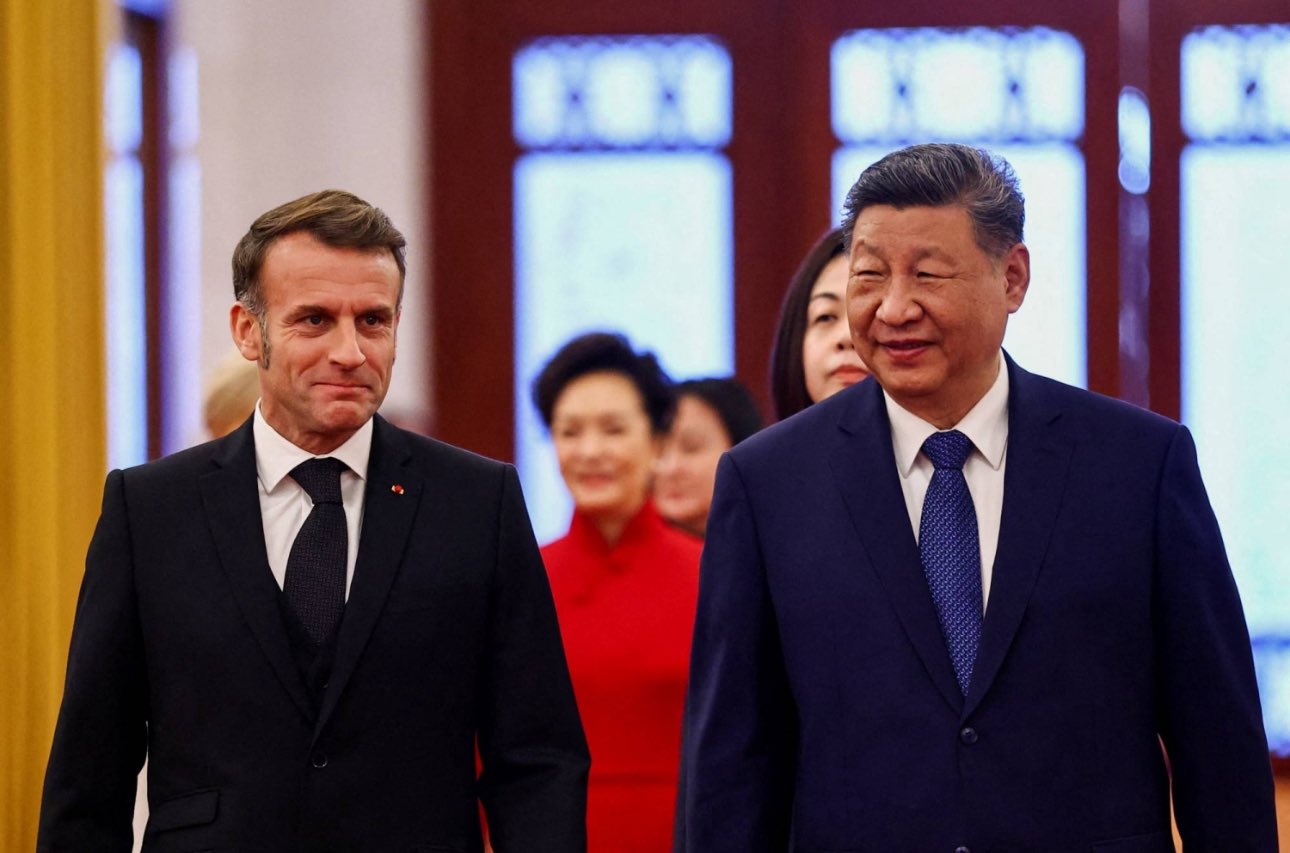 |
| Image Source: Visegrad24 |
President Xi, hosting Macron for the fourth time on Chinese soil, described the relationship as one between two “independent, visionary and responsible major countries,” and urged both sides to continue shaping a more “equal and orderly multipolar world” through strengthened cooperation in trade, green technology, global governance, and peace diplomacy.
During the visit, which included high-level dialogues, a military welcome ceremony, and a state banquet, Xi and Macron outlined a comprehensive four-point agenda spanning political alignment, economic collaboration, cultural exchange, and joint reform of multilateral institutions.
The summit marked a key moment for China’s diplomatic posture, positioning the Beijing–Paris axis as a stabilizing force amid a rapidly evolving global power structure.
Xi emphasized that both countries should maintain independence from external pressures, support each other’s core interests, and serve as constructive forces in steering global discourse toward inclusivity, fairness, and multilateralism.
Macron, reiterating France’s commitment to the one-China policy, signaled alignment on several fronts, including support for Chinese modernization, economic interdependence, and collaborative efforts in artificial intelligence, climate action, and biodiversity.
The visit comes as China continues to deepen its outreach to key EU states while facing rising tensions with the United States over issues such as Taiwan, trade restrictions, and technological decoupling.
In this context, Macron's trip offered Beijing a high-level European platform to reinforce the relevance of a rules-based yet multipolar order—one that does not echo Washington's agenda.
At the same time, Macron has repeatedly called for Europe to pursue “strategic autonomy,” a doctrine echoed in his Beijing remarks, where he warned against economic protectionism and emphasized interdependence as a strength, not a vulnerability.
On the economic front, both leaders witnessed the signing of new cooperation agreements in sectors ranging from nuclear energy and ecological protection to agri-food and education.
Trade between the two countries reached nearly $69 billion in the first 10 months of 2025, while cumulative two-way investment surpassed $27 billion.
Xi said China would welcome more French investment, expand market access, and foster a “fair, transparent, and predictable” business environment for French firms. Macron, in turn, pledged a level playing field for Chinese investors in France.
China also used the occasion to reinforce its domestic economic strategy under the 15th Five-Year Plan, showcasing new avenues for foreign engagement amid its push for high-quality growth and modernization.
Xi said China will drive its next phase of development through domestic demand, wider market access, and deeper integration of AI, green energy, and digital innovation. French firms were invited to actively participate in this transition.
Beyond bilateral matters, the two leaders used their joint press appearance to call for an urgent revamp of global governance. Xi reiterated Beijing’s support for a United Nations–centered international system and rejected “irresponsible attempts to shift blame or smear others.”
He committed $100 million in humanitarian aid to Palestine, calling for a fair and lasting resolution to the Gaza crisis, and reaffirmed China's continued role in facilitating a political settlement in Ukraine.
Macron agreed on the urgency of strengthening multilateral mechanisms, praising China’s global governance initiatives and urging greater European participation in reforming global institutions to better reflect the interests of developing nations.
Both leaders attended the closing ceremony of the China-France Business Council, where Xi positioned the bilateral relationship as entering a new 60-year cycle—built on “mutual respect, complementarity, and shared responsibility.”
He warned that “decoupling and severing supply chains will lead to isolation,” urging Europe to reject protectionism and reaffirm commitment to open, rules-based trade. Macron echoed these views, reinforcing that Europe-China cooperation must remain central to maintaining global economic stability.
Amid growing anxiety in Washington and Brussels over China’s diplomatic momentum in Europe, the optics of Xi and Macron sharing the stage in Beijing, celebrating cultural ties and economic partnership, will resonate across Western capitals.