

Jaishankar Warns of Fragmented Global Order as US Redefines Engagement, Calls for Stronger Indian Industrial Base
India’s External Affairs Minister Dr. S. Jaishankar, in a wide-ranging address after receiving an honorary doctorate from the Indian Institute of Management Calcutta, issued a sharp assessment of shifting global power structures and warned that traditional rules of engagement are giving way to more fragmented, unilateral approaches led by major powers, chiefly the United States.
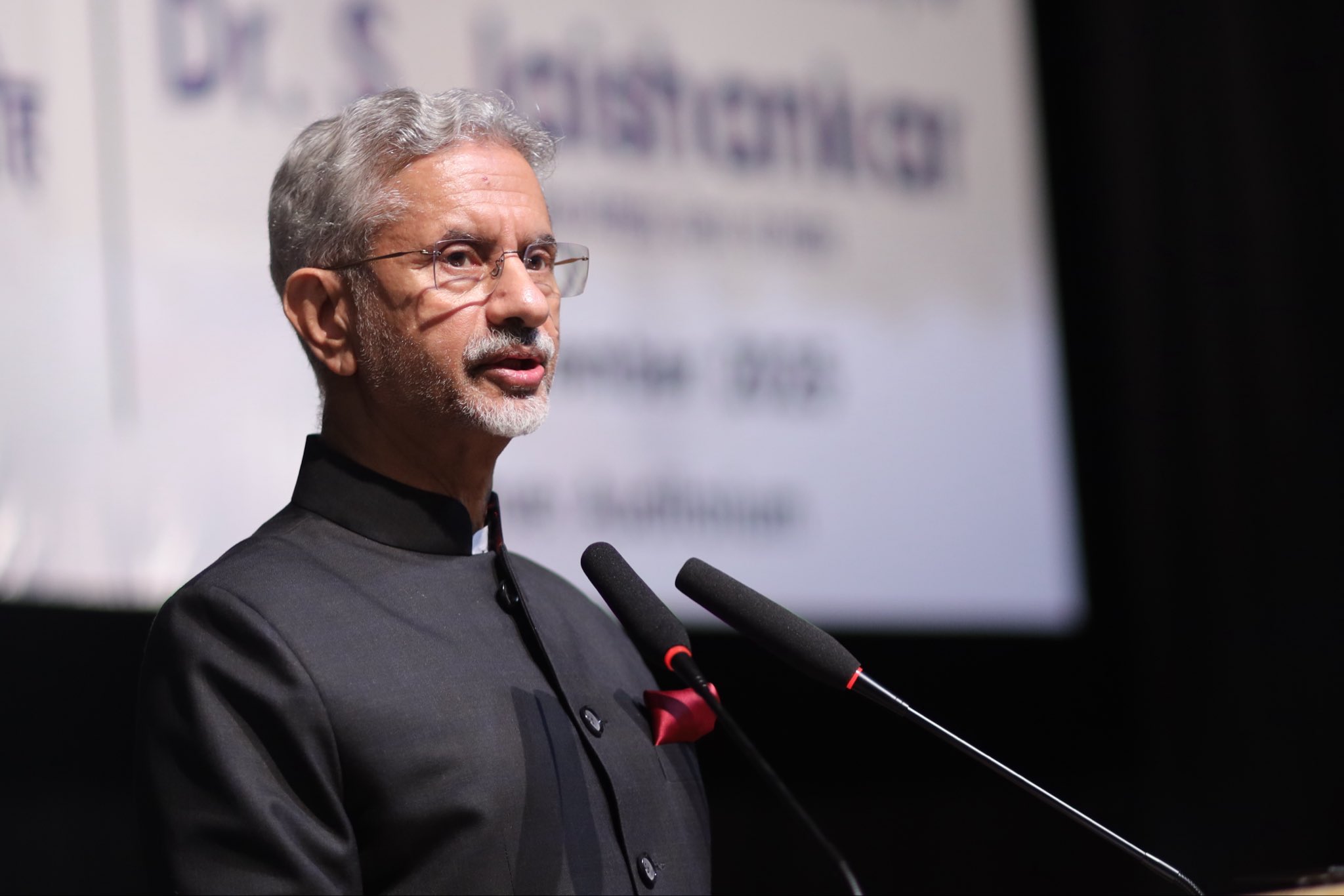 |
| Image Source: EAM Jaishankar |
“The United States has set radically new terms of engagement,” he said, adding that China has similarly continued to act by its own rules, intensifying the global trend toward power-based realignments.
In this emerging landscape, the minister said, decisions are no longer made purely on economic efficiency but are increasingly shaped by security, ownership and trust.
Concepts like “just in time” supply chains are being replaced with “just in case” strategies, as countries hedge against geopolitical risks and supply disruptions.
Amid this backdrop, Jaishankar argued that India's diplomatic strategy must now focus not only on managing vulnerabilities but also on boosting national capabilities in manufacturing, technology and connectivity.
He criticised the pre-2014 policy environment that he said had neglected the importance of a strong industrial base and argued that “Make in India” and technological self-reliance are now essential to projecting Indian power abroad.
He also emphasised the role of diplomats in facilitating technology transfer, opening markets, and promoting India’s industrial ambitions on the global stage.
“A major power, that too one with higher aspirations like us, must have a significant industrial base,” he said, linking India’s economic trajectory to its foreign policy footprint.
On broader global shifts, Jaishankar noted that power in domains such as finance, energy and technology is being rapidly redistributed. He pointed to the growing influence of artificial intelligence, supply chain reshuffling due to conflict and climate events, and the increasing salience of talent mobility and digital infrastructure.
India, he said, is positioning itself as a credible player by addressing these gaps—both through reforms at home and by building trust abroad.
In a clear critique of recent trends in US foreign policy, Jaishankar signaled that the old model of global governance—underpinned by institutions and norms—may no longer hold.
This reality, he warned, places greater pressure on countries like India to carve out their own space and secure their interests in a “less rule-bound and more fragmented world.”