

What We Know: Saudi‐Pakistan Defence Pact Raises Stakes for India Amid Terror Strife
Saudi Arabia and Pakistan have signed a formal Strategic Mutual Defense Agreement, pledging to treat any attack on either nation as an attack on both.
The pact, signed in Riyadh by Crown Prince Mohammed bin Salman and Prime Minister Shehbaz Sharif, represents the most significant military commitment between the two countries to date.
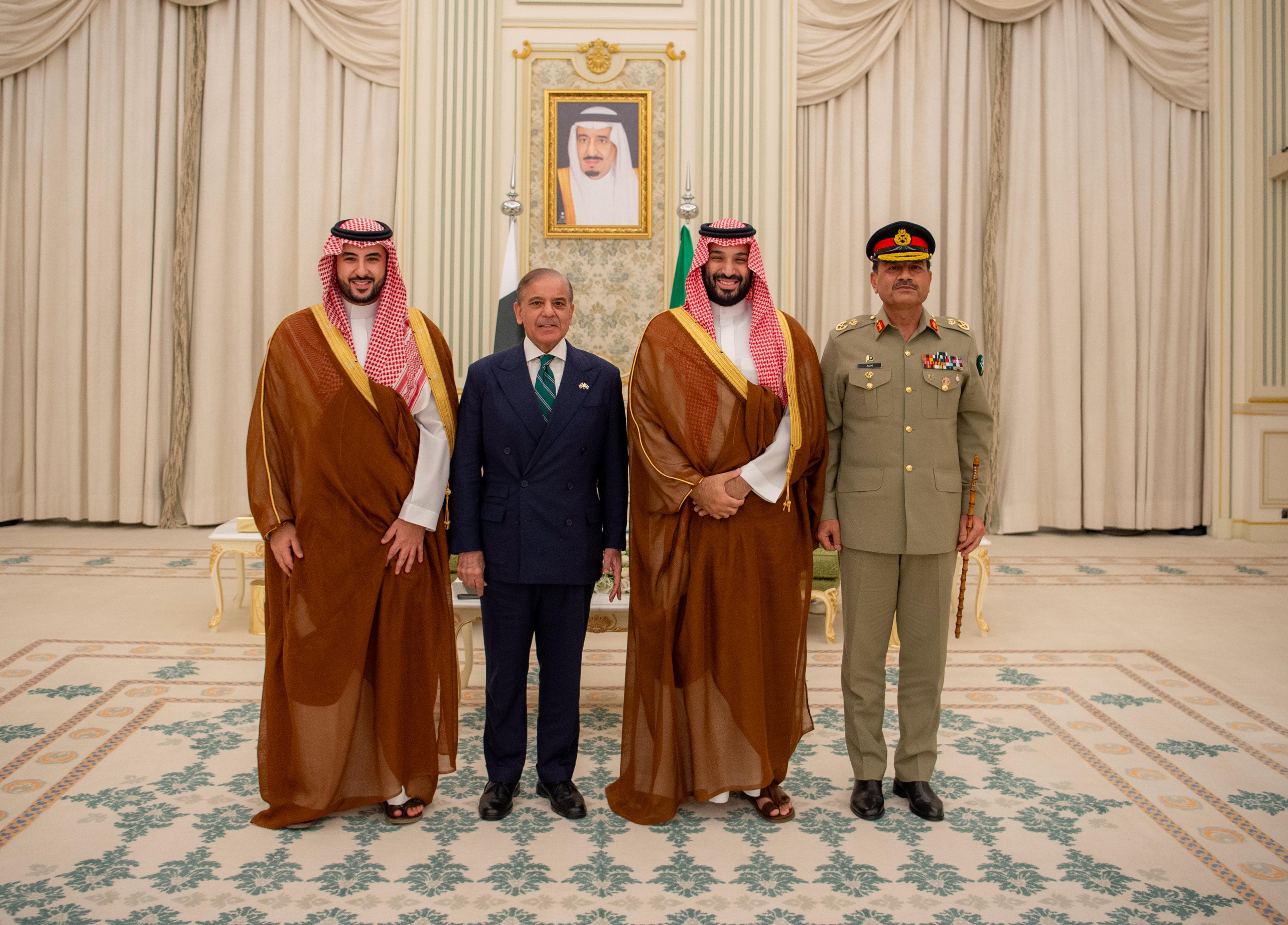 |
| Saudi Arabia and Pakistan Sign Mutual Defense. Via: Official Diplomatic Channels |
The accord aims to bolster defense cooperation, joint deterrence capabilities, and military coordination between the two longtime allies.
The deal follows a bilateral meeting in Jeddah, during which both leaders emphasized their commitment to expanding cooperation across trade, investment, energy, and regional security.
In a post on social media, Sharif praised the Kingdom’s “consistent support” for Pakistan and lauded Saudi efforts to bring peace to conflict zones such as the Middle East and Ukraine.
Joint Statement on the State Visit of Prime Minister of the Islamic Republic of Pakistan, Muhammad Shehbaz Sharif @CMShehbaz , to the Kingdom of Saudi Arabia.
— Ministry of Foreign Affairs - Pakistan (@ForeignOfficePk) September 17, 2025
🔗⬇️https://t.co/gG5hJ4Ka7e pic.twitter.com/AXRLnYGVda
The agreement marks a deepening of ties historically rooted in military cooperation, financial support, and shared Islamic heritage. With top military officials--including Pakistan’s Army Chief General Asim Munir--part of Sharif’s delegation, the defense pact signals a strategic upgrade in the security architecture of the Islamic world.
Officials say the move reflects a unified stance amid rising regional threats, with the pact aimed at deterring external aggression and enhancing joint military preparedness.
#PICTURES: Several Saudi Royal Air Force fighter jets escorted the aircraft carrying Pakistan’s Prime Minister Shehbaz Sharif from the moment it entered Saudi airspace until its landing at King Khalid International Airport in Riyadh pic.twitter.com/8D0vsjh56A
— Saudi Gazette (@Saudi_Gazette) September 17, 2025
For India, this pact comes against a backdrop of repeated accusations that Islamabad supports cross‑border terrorism that results in violence on Indian soil.
In April 2025, the Pahalgam terror attack killed 26 tourists, including 25 Indians, which India says was carried out with support from Pakistani militant groups.
In response, India executed Operation Syndoor on May 7, targeting nine terrorist infrastructure sites inside Pakistan and illegally Pakistan‑occupied Kashmir with missiles and long‑range weapons in a strike India described as “precise, measured, and non‑escalatory.”
The new Saudi‑Pakistan defence treaty could complicate India’s military options. With Pakistan now more formally backed through this agreement, India may face higher deterrent value against its counter‑terror operations and retaliatory strikes.
#PICTURES: Crown Prince Mohammed bin Salman receives Pakistan’s Prime Minister Shehbaz Sharif at Al-Yamamah Palace in Riyadh and holds an official reception ceremony in his honor pic.twitter.com/LfaGlKMTvc
— Saudi Gazette (@Saudi_Gazette) September 17, 2025
It raises the diplomatic and military cost of cross‐border actions, potentially increasing India’s need for broader international support and more airtight intelligence to avoid escalation.
Finally, the pact also has implications for India's security doctrine and regional diplomacy. India has already taken steps to suspend the Indus Waters Treaty, and repeatedly emphasized that "terror and talks can’t go together".
Also Read:
Pakistan’s Nuclear Posturing in Iran-Israel Conflict Raises Fresh Alarms
What We Know: Saudi‐Pakistan Defence Pact Raises Stakes for India Amid Terror Strife