

India’s Congress Party Condemns US Military Action in Venezuela as Illegal, Citing UN Charter Violations Amid Global Outcry
The Indian National Congress, India's main Opposition party, has issued a sharp rebuke of the United States’ military intervention in Venezuela by calling it a violation of international norms and a threat to global stability.
In an official statement posted by the party’s Foreign Affairs Department, the Congress expressed "grave concern" over what it described as “unilateral actions” undertaken by the United States in the Latin American nation over the past 48 hours.
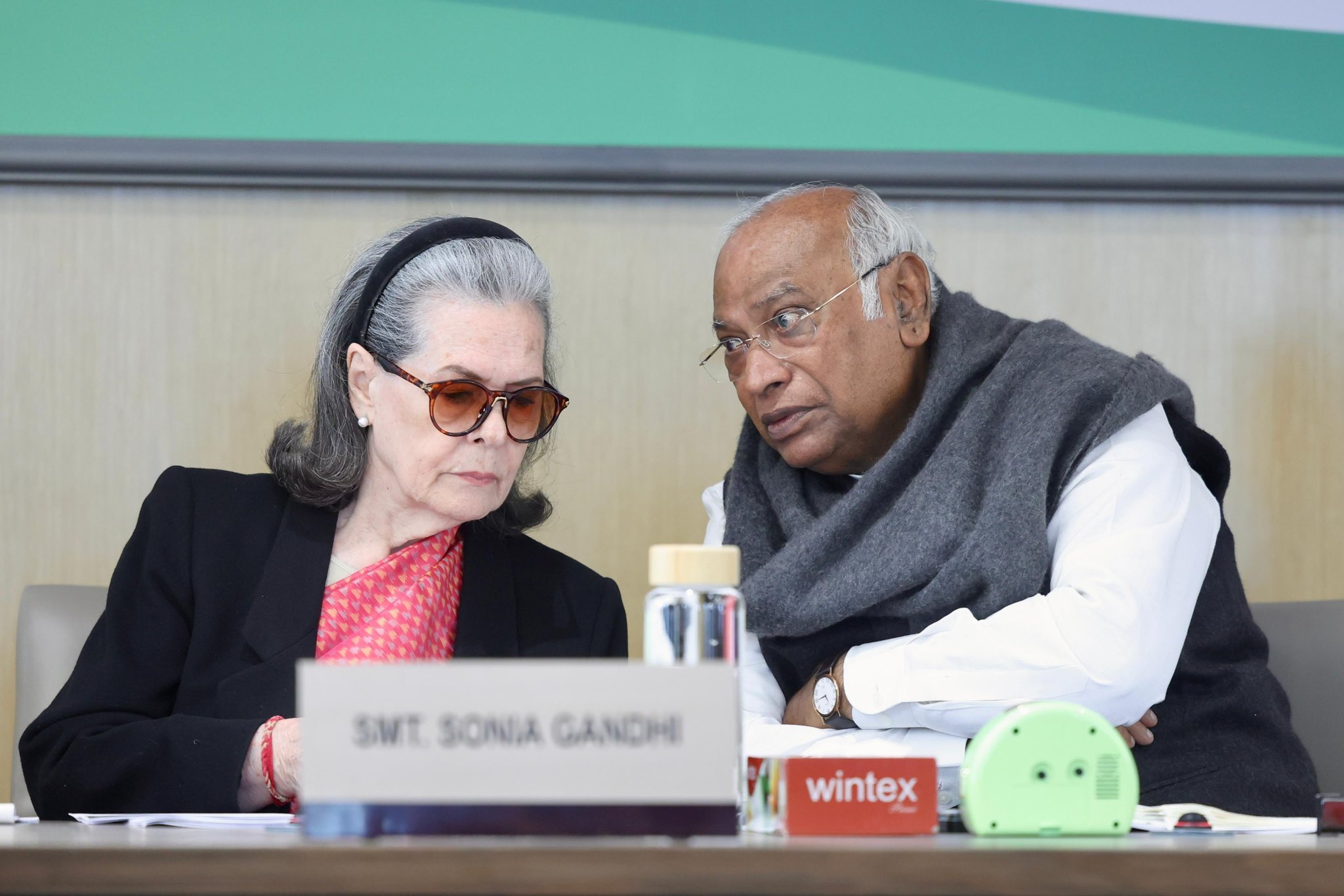 |
| Image Source: Kharge on X |
The statement stressed the importance of respecting national sovereignty and peaceful coexistence, warning that bypassing these principles without explicit United Nations sanction risked returning the world to “primordial rules of statecraft.”
It underscored that the will of the Venezuelan people must remain central and that the country’s resources should be used for their benefit, invoking the principle of Permanent Sovereignty over Natural Resources—a doctrine enshrined in international law.
This response from India’s principal opposition party adds to a mounting global chorus of condemnation and concern following the dramatic events of January 3, when U.S. forces launched airstrikes and conducted a targeted raid in Caracas.
The operation led to the capture of Venezuelan President Nicolás Maduro and his wife, Cilia Flores, both of whom are now in U.S. custody facing drug trafficking and terrorism-related charges in a New York federal court.
International reactions have sharply diverged. Russia and China have condemned the U.S. operation as a flagrant violation of Venezuelan sovereignty and international law, urging restraint and advocating for diplomatic solutions.
The Kremlin described the strikes as “armed aggression” and reaffirmed its support for the Bolivarian leadership, while Beijing called the move a “hegemonic act” and demanded the immediate release of Maduro and his wife.
In contrast, leaders from Canada, the United Kingdom, and France welcomed the removal of Maduro. Canadian opposition leader Mark Carney praised what he called “an opportunity for peace and prosperity,” while UK Prime Minister Keir Starmer stated that Britain had “shed no tears” over the end of what it regards as Maduro’s illegitimate regime.
French President Emmanuel Macron called Maduro's removal a liberation for the Venezuelan people and backed a transition led by opposition figure Edmundo González Urrutia.
The European Union has taken a more cautious stance, emphasizing that any political transition in Venezuela must include democratic actors such as María Corina Machado.
Meanwhile, Switzerland has frozen Maduro’s assets, citing concerns over the legality of his financial holdings and pledging to redirect any ill-gotten wealth for the benefit of the Venezuelan people, pending judicial outcomes.
At the United Nations, Secretary-General António Guterres, through Under-Secretary-General Rosemary DiCarlo, warned that the January 3 military action “raises serious questions” about adherence to the UN Charter.
He reiterated the international legal prohibitions on the use of force and stressed the need to respect Venezuela’s sovereignty, calling for an inclusive and democratic national dialogue.
On the ground in Caracas, Vice President Delcy Rodríguez has assumed interim authority, backed by the Venezuelan Supreme Court and military. In her address, she called for peaceful coexistence and extended an invitation to the U.S. to work collaboratively toward a cooperative future, while also affirming Maduro’s message of dialogue and non-interference.
President Donald Trump has maintained a defiant tone, stating that the United States “is in charge” of Venezuela until a proper transition is ensured. He has also hinted at broader regional ambitions, reviving rhetoric around Greenland and issuing warnings to Cuba and Colombia.
Secretary of State Marco Rubio has confirmed that the U.S. is evaluating further measures and said that “multiple levers” remain on the table if Venezuela’s new leadership fails to meet expectations.