

The Death of the Great Indian Dream: Saket Suman’s New Book Blocked Amid Publishing Dispute
There is no neat way to say this: the Great Indian Dream is dying. And it’s not being killed in faraway conflict zones, or in newsrooms that peddle noise instead of truth. It is being murdered in back offices of publishing houses and literary circuits, where contracts are torn with a smile, where deadlines are missed with impunity, where one writer's labour of years is discarded over silence, and where reputations are butchered so that the powerful remain unbothered. The very spaces meant to champion creativity are the first to abandon those who try to speak freely, those who refuse to bend, those who dare to write with sincerity.
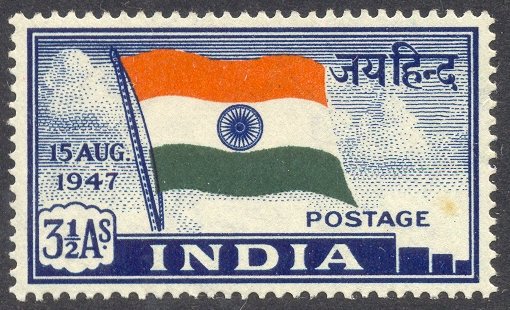 |
| Representational Image: The 1st stamp of independent India shows the Indian Flag, released on 21Nov1947. |
New AD | Ranveer Singh for Rupa frontline ♥️ pic.twitter.com/EbW79xqFMK
— Ranveer Singh TBT (@Ranveertbt) May 10, 2023
In the last few weeks, I have been gaslit, misrepresented, and
finally accused of harassment, simply for asking for what was promised to me in
writing. I was told my tone was the problem. As if civility is the currency we
demand only from the powerless. As if the real issue was not the missed
timelines, the absent manuscript, the delayed typeset file, the absent
marketing plan — all days before going to press — but that I, a writer, had the
audacity to call it out.
This isn’t about me alone. It’s about an entire generation of
writers whose careers are throttled before they begin. This is the reason you
don’t hear fresh, honest, unfiltered voices from India. Because the few who are
brave enough to try are noticed early — and sabotaged early. There is no
conspiracy theory here. The same surnames appear on every litfest panel. The
same children of literary aristocracy walk into publishing deals like
birthright. And when someone dares to disrupt this feudal economy of culture,
they are quietly erased — through silence, delay, or smear. There are no
headlines about this. Because the monopolists own the headlines too.
Let us be honest about the times we live in. A time when propaganda passes off as publishing. When houses that have no real editorial culture or rigour are rewarded for delivering what the powerful want to read. When publishers act as couriers of political messaging and are rewarded with access to ministries, special contracts, and curated respectability. But let’s ask this: at what cost? At the cost of burying books that take years to write? At the cost of dismissing the work of authors whose only mistake is that they asked questions, or said no to bend to monopolists that gutted the soul of their work?
Shocking and scandalous - The public sector Union Bank of India decided to buy almost 2,00,000 copies of a book - worth a total of Rs 7.25 crore - by Krishnamurthy Subramanian who was asked to leave his post of India’s nominee executive director at the International Monetary… pic.twitter.com/IhAyWC1r4N
— ParanjoyGuhaThakurta (@paranjoygt) May 6, 2025
In my case, the publisher did not just fail. It then tried to
cover up that failure by shifting the goalposts. First, they claimed the
termination was at my request — a lie. Then, they said it was because of
harassment — a label thrown to distract from their own dereliction of duty.
When I demanded accountability, they invoked a clause about reputational risk —
but conveniently forgot that the manuscript had already passed all editorial
stages, and that I had remained open to edits till the very end. No notice was
served to me. No breach was claimed. No risk was documented. The only risk I
apparently posed was that I refused to allow my work be sabotaged through evil
means, not limited to orchestrated piracy.
And what does this sabotage mean for the book itself? It means
it will now be buried in legal proceedings. It means the moment it was written
for — a moment of national urgency and clarity — may have passed by the time it
sees light. And that is no small loss. Because writers do not write forever.
Our years are limited. Our seasons are fleeting. When you rob a writer of his
time, you rob the nation of his contribution.
This is where we are now: a country where young Indians are
told to dream big — but only so long as those dreams do not threaten the status
quo. Where the same voices are paraded in every panel while fresh ones are
silenced before they speak. Where hard work is mocked with indifference, and
publishing deals are more about proximity to power than about the power of
prose.
The death of the Great Indian Dream is not a metaphor anymore.
It is a lived reality, a manuscript ghosted. A contract broken. A smear
campaign launched to make a writer afraid to fight back. But I will fight back.
I have no political godfather. No family name that opens doors. But I have a
manuscript. I have a timeline. I have every email, every deadline missed, every
contradiction in writing. And I am ready to take it to conclusion — in court,
in arbitration, in every platform that still believes in fairness.
This is about what kind of nation we are becoming. Are we
going to let power crush possibility, let monopoly dictate who gets to speak,
let laziness hide behind defamation? Or are we going to reclaim space for
fairness, for creative liberty, for the idea that hard work matters more than
champagne dinners at litfests where nothing literary is the ambition or ultimate
goal?
Who can dance on 'Nirma' Ad ?
— ®️aminder (Author Immaculate Thoughts) (@ramindersays) November 18, 2020
We Punjabis 😄😄 pic.twitter.com/2WHFueIh85
This country cannot afford to lose more truth-tellers. It
cannot allow a publisher to hide behind contracts they never honoured, and
disclaimers they never read. It cannot look away as another young Indian sees
his labour erased because someone in a powerful office didn’t like a name in a
crucial chapter, a name that was in fact added on the publisher’s suggestion. It was a trouble-free
manuscript, mishandled through several stages, being jeopardized and who gains
out of it? It was a travelogue through the terrains of the Indian thought
process, through its everyday realities but it threatened the literary status
quo of this country.
Modi and Rahul may not agree on anything, but they must agree on this: India cannot thrive on fear. Writers must not be punished for doing their job. Those who violate contracts, mock authors whose dads and mums aren't in the literary world, and play with the fate of manuscripts for monopolistic benefits must be held accountable.
Not because I say so. But because it is in the national interest to do so. Let the book come out. Let the truth come out. And let the country decide.
(The author’s previous book, The Psychology of a Patriot,
was pirated within a week of its release, and met with silence. This time,
the threat is erasure. He knows that standing up to a
powerful publisher may bury years of his life’s work. But he also knows what
silence costs a country. Most look away at the last moment. He will not.
Because the real death of the Great Indian Dream is when we stop fighting for
the right to speak it aloud.)
ALSO READ:
The Empire Writes Backwards: Jaipur Literature Festival and the Business of Cultural Trap