

India Warns China After Shanghai Airport Incident, Says Energy Ties With Russia Will Not Be Politicised
India on Monday issued a pointed advisory to its citizens transiting through Chinese airports, following a reported incident of arbitrary detention involving an Indian national at Shanghai.
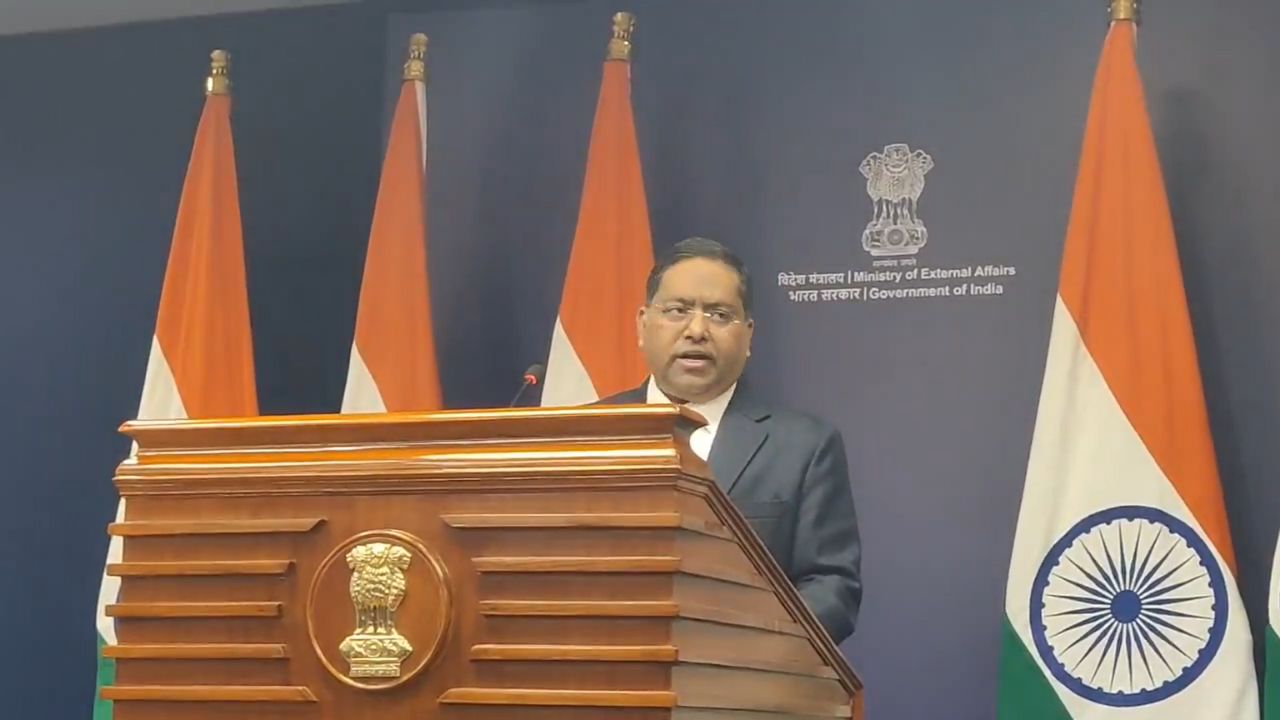 |
| Image Source: Raksha Samachar on X |
He further advised Indian nationals to exercise “due caution” when travelling to or through China. The briefing, part of the MEA’s weekly public engagement, touched on a range of flashpoints across India’s diplomatic landscape, from border violence in Afghanistan and rising insecurity in Myanmar, to energy trade with Russia and counter-terror cooperation with the US.
Responding to questions from reporters, Jaiswal welcomed recent action by the UK government against pro-Khalistan actors, including Gurpreet Singh Rihal and the extremist entity Babbar Akali Dal.
He termed the move a “positive step in the global fight against terrorism and extremism,” and said it helps disrupt transnational crime and illicit financial flows.
“We look forward to continuing strong counter-terrorism cooperation with the UK,” he said.
On India’s counter-terror partnership with the United States, Jaiswal confirmed that both nations called for additional designations of individuals and proxy groups affiliated with Lashkar-e-Taiba and Jaish-e-Mohammad under the UN 1267 sanctions list, following the 21st Counter-Terrorism Working Group meeting held on December 3 in New Delhi.
Asked about recent political unrest in Pakistan, Jaiswal was blunt. “Democracy and Pakistan do not often go together. The less said, the better,” he said, referring to the jailing of Imran Khan and street protests across the country.
Addressing recent remarks by Russia’s President Vladimir Putin promising uninterrupted fuel supply to India, the MEA made it clear that India has not imposed any embargo on importing Russian oil.
“Energy sourcing decisions are based on national interest, affordability, and global market dynamics,” Jaiswal said. He also reiterated that purchases by Indian private companies are commercial decisions.
On Myanmar, the spokesperson said India supports a transition to democracy and emphasised the need for “free, fair, and inclusive elections” with participation of all stakeholders.
He acknowledged the severe humanitarian crisis in Myanmar and pointed to India’s ongoing medical aid, relief operations, and development cooperation, stressing that India “responded swiftly” after recent natural disasters and continues to assist as needed.
India also rejected China and Pakistan’s remarks on Arunachal Pradesh. “Arunachal Pradesh is and will remain an integral part of India. We reject any interference,” Jaiswal said.
The MEA welcomed the newly released US National Security Strategy 2025, which identifies India as a key Indo-Pacific partner and underscores collaboration in commerce, critical minerals, and technology.
The MEA described the report as aligned with the expanding India–US Comprehensive Global Strategic Partnership.
Meanwhile, a US trade delegation led by Deputy Trade Representative Ambassador Rick Schweitzer is scheduled to arrive in New Delhi on December 10–11 to hold talks with senior Indian officials. The visit aims to further efforts toward a mutually beneficial, multi-sectoral trade agreement.
On the volatile situation in Myanmar, Afghanistan-Pakistan border tensions, and Thailand-Cambodia hostilities, the MEA urged restraint and reiterated India’s support for peace, territorial integrity, and return to dialogue.
No comment was made on a potential visit by Ukraine’s President Volodymyr Zelenskyy, but the MEA noted that any updates would be shared in due course.
Closing the session, Jaiswal reaffirmed India’s policy continuity: “We remain guided by national interest, global stability, and the principles of sovereignty, democracy, and dialogue.”